Power Quality (PQ) refers to the quality of electrical energy in the power system, mainly including voltage quality, current quality, and frequency quality, which directly affects the stability and safety of the power system, as well as the performance and lifespan of electrical equipment. The factors that affect power quality include:
1. Voltage fluctuations, such as significant changes in voltage within a short period of time, may cause issues such as lighting flicker and unstable motor speed, which may damage sensitive electronic devices;
2. Frequency deviation, the deviation of the power grid frequency from the standard value (such as 50Hz or 60Hz), affects the normal operation of rotating mechanical equipment;
3. Harmonics refer to the distortion of current or voltage waveforms. The high-order harmonics generated by nonlinear loads (such as frequency converters, rectifiers, etc.) will be superimposed on the fundamental wave, causing waveform distortion, increasing losses, and interfering with other equipment.
Methods to improve power quality
1.Install filters: Use filters to reduce harmonic content.
2. Use a voltage regulator: stabilize the voltage and reduce the impact of voltage fluctuations.
3. Optimize load distribution: Allocate loads reasonably to avoid single-phase imbalance.
4. Regular inspection and maintenance: Regularly inspect the power system, promptly identify and solve problems, and the power quality tester can monitor and troubleshoot the power quality of the grid system.
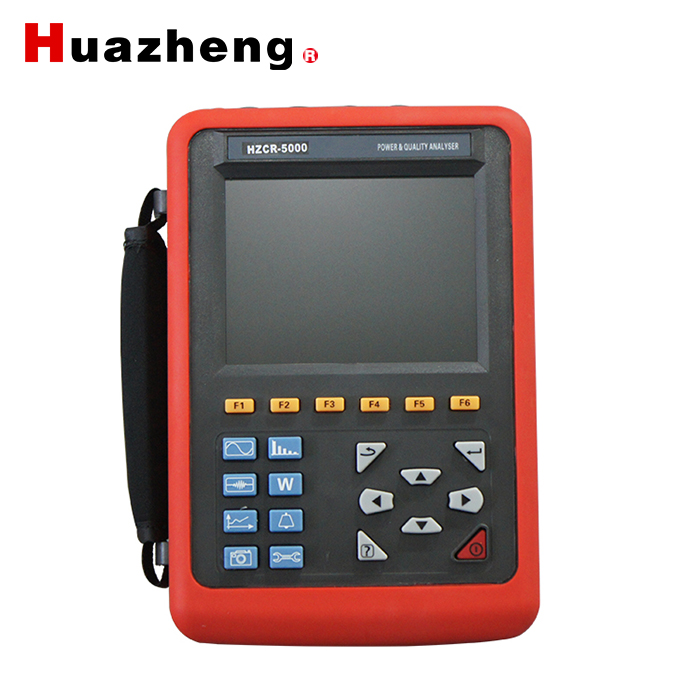
HZCR-5000 Portable Three Phase Power Quality Analyzer

 中文
中文
 English

 +86-312-6775656
 +86 13731210226
 sales03@bdhuazheng.com
