1. Substation capacitor charged detection method
1. Withstand voltage test
Withstand voltage testing is one of the main methods to test the ability of electrical appliances, electrical equipment, electrical devices, electrical circuits and electrical safety equipment to withstand overvoltage. It is mainly divided into two forms: power frequency withstand voltage detection and DC withstand voltage detection. When conducting power frequency withstand voltage testing, the test voltage should be one or more times the rated voltage of the equipment being tested, and should not be less than 1000V. The DC withstand voltage experiment can test power equipment by leaking voltage values and drawing leakage current-voltage curves to discover equipment defects. For capacitors, power frequency withstand voltage testing is generally more frequent, and different pressure range values are used for testing according to different capacitor capacities.
2. Insulation test
The insulation test mainly uses the application of insulating materials and corresponding components to separate conductors with different potentials so that they are not electrically connected to maintain different potentials, thereby ensuring that live parts can work normally. It is mainly divided into two types: insulation withstand voltage test and insulation characteristic test. Conducting an insulation withstand voltage test on a capacitor can help you understand the maximum voltage withstand value of the capacitor. However, because the results may show tolerance or breakdown, it is also called a destructive test. Insulation property tests are mainly conducted in lower voltage environments. Generally speaking, they cause less damage to capacitors and may cause less risks. They are also called non-destructive tests. Capacitors need to undergo corresponding insulation characteristic tests before leaving the factory and during operation to understand the actual application of the capacitor.
3. Capacitance measurement
Capacitance measurement mainly measures the capacitance value of the capacitor, which mainly includes special instrument method, AC impedance calculation method, and double voltmeter method. Capacitance measurement of capacitors through special instruments has the characteristics of simplicity, speed, high accuracy, and intuitive readings. Digital capacitance meters, LCR automatic measuring instruments, universal bridges, etc. are all commonly used measuring instruments. The digital capacitance meter mainly measures capacitance through the principle of charge and discharge, and converts the measured capacitance into a voltage value through a C/V conversion circuit for display. The LCR automatic measuring instrument is controlled by a microcomputer, is more digital, and has higher performance. It mainly uses the impedance-vector voltage method principle to measure capacitance. The universal bridge mainly uses the principle of AC bridge to measure the capacitance of capacitors and measure multiple parameters such as resistance, capacitance, and inductance.
2. Analysis and treatment of substation capacitor faults
1. Analysis and corresponding treatment of oil leakage
Capacitors are fully sealed equipment. The occurrence of lax sealing of capacitors is mainly caused by unqualified production and failure to carry out maintenance work quickly. Once the seal is not tight, oil leakage is the most common problem, which will reduce the quality and purity of the oil inside the tank and reduce its insulation performance. Due to certain defects in the production process, the connection between the tank weld and the casing cannot be tightly welded, which can easily lead to oil leakage.
When welding the bolts and caps of the casing, a lower-strength welding method should be used. Excessive force may cause falling off. Some capacitors use a hard busbar connection method, which causes stress on the bolts. Once the stress situation changes, the temperature will also change, which will cause damage to the connections between parts. During transportation, if appropriate operating methods are not selected, weld cracking may occur.
In order to solve the above problems smoothly, it is necessary to ensure that the capacitor is in normal operation. As relevant inspection and maintenance personnel, they should focus on using a variety of measures, strengthen management work, focus on formulating relevant solution strategies, and ensure that the solution strategies are targeted.
2. Analysis and treatment of bulging belly phenomenon
The bulging phenomenon is a common capacitor failure. During the working process of the capacitor, the temperature changes are relatively obvious, and significant physical changes will also occur inside the equipment. The outer shell is very prone to expansion or contraction. However, when a partial discharge occurs inside the equipment, the insulating oil will undergo a chemical reaction, releasing a large amount of gas, the internal air pressure will rise, and the inner wall of the box will expand and deform, resulting in a bulging phenomenon. Among the causes of the bulging phenomenon, substandard production technology plays a major role. Due to the relatively low quality of internal parts, the insulating effect of capacitor gasoline cannot be fully exerted. In actual use, when the field strength or current is too large, , it is easier to cause insulation problems. Therefore, in the process of selecting capacitors, relevant purchase work should be carried out strictly and the quality of the purchase should be well controlled.
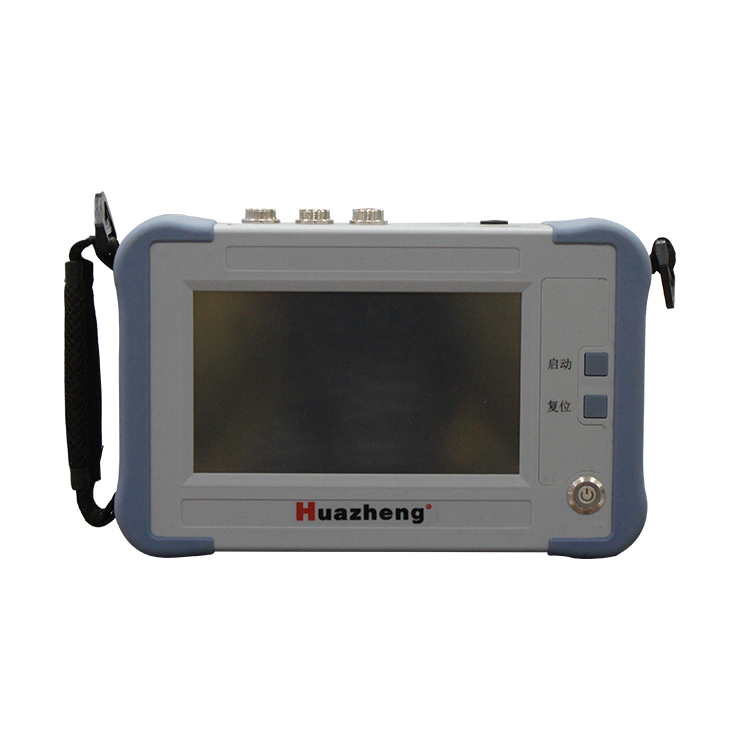
HZ2141 Handheld Capacitance Inductance Tester

 中文
中文
 English

 +86-312-6775656
 +86 13731210226
 sales03@bdhuazheng.com
