Transformers are important electrical equipment in power operation and play an important role in the production of industrial and mining enterprises. Transformer on-load voltage regulating switches often malfunction during operation. The troubleshooting methods and measures are very important for the normal operation of production.
1. Switch linkage processing
The reasons for the linkage are as follows: (1) The influence of the residual magnetism of the AC contactor core causes the contacts to stick or singe between the contacts. After the power is cut off, the contactor core cannot be separated immediately, causing the voltage regulating mechanism to operate. . You can choose a good quality contactor. During temporary treatment, the contact surfaces of the moving and static contacts can be polished with emery cloth and cleaned with gasoline.
(2) The upper and lower cam pieces at the limit switch are improperly adjusted. The red sign in the green zone is not in the center of the window. The adjustment of the upper and lower cam pieces should be based on the red mark in the green zone stopping in the center of the window. When adjusting, loosen the fastening screw on the cam and turn the cam by hand several times.
(3) There is a spring under the small shaft of the travel switch CK. After the cam rotates, the spring tightens to store energy; the roller quickly falls to the groove and cuts off the operating power. After the spring loses its elasticity due to fatigue, the limit switch port cannot immediately cut off the power supply, causing linkage. If the spring loses its elasticity, it needs to be replaced with a new one. If it is slightly deformed, it can be interchanged and adjusted to restore its elasticity.
2. Switch refusal processing
(1) Refusal to move in both directions. The reason why the voltage cannot be adjusted in both lifting and lowering directions is that there is a fault in the public line part. The main reasons are: no three-phase power supply, the air circuit breaker is tripped or the transfer switch is not closed; the three-phase power supply lacks a phase and cannot start the motor; there is no operating power supply. ; The neutral point of the voltage value is displaced; the interlock switch contact fails to connect due to the failure of the spring leaf to reset. If these four items are checked and normal but cannot operate, it means that the control circuit cannot form a loop and the neutral line is open.
(2) It can move in one direction but refuses to move in the other direction. The failure of the common part of the main circuit and the operating circuit can be eliminated. Check on the resisting operation circuit. The reason is that the limit switch action is not reset, the contactor of the resisting circuit is burnt, the direction memory cam switch is displaced, etc., so that the resisting circuit cannot form a path. To troubleshoot and eliminate faults.
3. Oil level abnormality handling
The oil in the on-load voltage regulating transformer tank and the oil in the voltage regulating device box are isolated. Their oil conservator tanks are also isolated from each other. One is connected to the oil tank of the transformer body, and the other is connected to the oil tank of the voltage regulating device. The two oils cannot mix during operation. Since the on-load voltage regulating tap-changer often regulates voltage under load, arcing may occur during the operation of the tap-changer, which may degrade the oil quality. If the oil in the two tanks is mixed, the quality of the oil in the transformer body may deteriorate, the insulation may decrease, and the safe operation of the transformer may be affected. To monitor the operation of the transformer, compare the oil level of the transformer with the oil level of the voltage regulating device. The difference between the two indicates that the two fuel tanks and oil pillows are well sealed. It would be better if the oil level of the transformer body is kept higher than the oil level of the voltage regulating device. If the oil levels in the two parts are nearly equal, an oil sample should be taken for chromatographic analysis to avoid mixing the oil in the two tanks due to poor sealing. Tighten the connection between the tap changer and the transformer oil tank firmly to prevent any connection and avoid false oil level in the tap changer.
4. How to prevent the transformer output voltage from changing during voltage regulation operation
Electric operation is required when regulating voltage. Each time the pressure regulating button is operated, only one gear can be adjusted. When the voltage regulation indicator light is on, release the button immediately to return. Also pay attention to the voltmeter and ammeter indications, and pay attention to changes in gear indications. Identify faults by detecting abnormalities. After adjusting one gear, stop for a moment before adjusting to the next gear.
(1) The output voltage of the transformer does not change, the voltage regulation indicator light is on, and the tap changer gear indication does not change. This means that the motor is idling and the operating mechanism does not act. This situation often occurs when after maintenance work, the connection set on the horizontal turbine is forgotten, causing the motor to idle. It may also be due to frequent voltage regulating operations that the connecting pin of the transmission part falls off. Install the connecting sleeve or pin and continue operation.
(2) When the output voltage of the transformer does not change, the voltage regulation indicator light does not light up, and the gear indication of the tap changer does not change, it means there is no operating power supply or the control circuit is blocked. The following processing is required. First check whether the fuse of the voltage regulating operation is blown or has poor contact. If there is a problem, the voltage regulating operation should be continued after replacement; if there is no problem, operate it again and observe whether the contactor operates to identify the fault. If the contactor operates but the motor does not rotate, the contactor may be in poor contact or stuck, or there may be a problem with the motor. If the voltage measured on the motor terminals is abnormal, it should be a problem with the contactor; otherwise, there is a problem with the motor. If the contactor does not operate, it must be checked by a professional.
(3) The output voltage of the transformer does not change, the voltage regulation indicator light is on, and the gear position indication of the tap changer has changed. It indicates that the operating machinery has moved, which may be a problem with the dead center mechanism. The selector switch has moved, but the switch has not moved. Remember not to press the pressure regulating button again. Otherwise, the selector switch will burn out due to arcing. At this time, use the handle immediately to restore the mechanism to its original position. Also listen carefully for any abnormal sounds inside the pressure regulating device. If there are abnormalities, a spare transformer must be put in, and the faulty transformer must be powered off for maintenance; if there are no abnormalities, professionals must be sent to take oil samples for chromatographic analysis.
5. Processing of continuous multi-level pressure regulation in one pressure regulating operation
This kind of clear tap changer may be adjusted to the "end" position, and the operating mechanism realizes mechanical locking limit. The reason is that the contactor is held and the contacts cannot be opened. Regardless of whether the mechanism's voltage-regulating action reaches the "end" position, the power supply to the voltage-regulating motor must be cut off immediately, and then the operating handle is used to adjust the voltage manually to the appropriate gear to prevent the output voltage of the transformer from being too high or too low. . Notify the maintenance personnel to deal with the defect of non-return of the contactor. If it is found frequently, a backup transformer or backup power supply should be put in. The faulty transformer should be shut down for maintenance.
6. The on-load tap-changer is provided with transition current blocking treatment to prevent the on-load tap-changer fault from expanding.
The on-load voltage regulating tap-changer is used to change the tap of the primary or secondary coil of the transformer during load operation, and change the number of effective turns for step-by-step voltage regulation. The tap changer generally uses reactance or resistance transition during switching to limit the circulating current of its transition. If a resistor transition is used, the resistor works for a short period of time and the operation of the operating mechanism must be completed continuously. If the operation is interrupted due to unreliability of the mechanism and stops at the transition position, the resistor may burn out and cause an open circuit. To determine whether the transition resistor is burned out and the circuit is broken, the current during operation can be observed. Regardless of upshifting or downshifting, during the conversion process, the current tends to become smaller due to the introduction of a transition resistor in series. You can see that the ammeter pointer swings a little in the decreasing direction and then rises. If there is no current drop during operation, it indicates that the transition resistor is broken and needs to be replaced. For the on-load voltage regulating tap changer, replace the burnt transition resistor and contacts, repair the burnt leads, replace the transformer oil that fails the test, and replace the oil number, and add the transformer oil that has passed the test to the appropriate location.
A gas collection device is installed at the highest point on the top of the switch. This device can understand the gas evolution status during the operation of the switch at any time and make an immediate decision on whether the switch can continue to operate. An oil temperature measuring device can be installed above the switch oil chamber to monitor whether the oil temperature is abnormal, and an alarm device can also be installed to detect when the oil temperature exceeds the range. For switches whose energy storage mechanism is located above the switch, the energy storage mechanism must have a larger exhaust channel to ensure that the oil chamber has sufficient mechanical strength and sealing strength to withstand greater pressure. Before the switch is put into operation, the protective cover on the blasting cover of the switch must be removed, and the direction of the arrow on the gas relay shell should be pointed to the oil conservator. Also check whether the light and heavy gas contact circuits are normal. Check whether the valve between the oil conservator and the gas relay is open to prevent affecting the action of the protective relay.
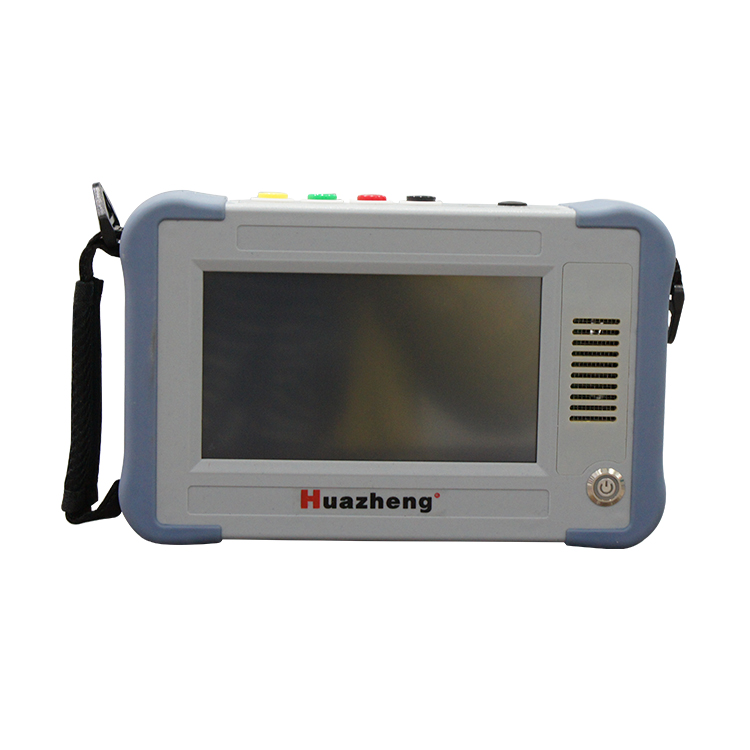
HZYA-2Z-I Hand-held On Load Switch Tester

 中文
中文
 English

 +86-312-6775656
 +86 13731210226
 sales03@bdhuazheng.com
