Transformers work on the principle of electromagnetic induction, changing voltage, connecting to the power grid, transmitting and distributing electric energy; power transformers are the core equipment of substations, with complex structures and harsh operating environments. Failures and accidents have a great impact on the reliability of the power grid and power supply, and need to be targeted specifically. Take immediate measures if the situation arises; the analysis and judgment of transformer faults involves many subject areas, including basic knowledge of electrical engineering, high voltage, insulation materials, chemical analysis, etc., as well as familiarity with automation, thermal science, etc.; there are many types of transformer faults, and their manifestations vary widely. , you need to be familiar with the structural principles, familiar with the on-site operating conditions, familiar with the characteristics of each equipment, etc., and analyze specific problems in detail.
Chapter 1: Characteristics and on-site treatment of dominant faults of large transformers
Dominant fault: refers to a fault whose characteristics and manifestations are relatively intuitive and obvious. Here, combined with the actual situation on site, the causes and characteristics of dominant faults of large transformers are described and analyzed, and common on-site treatment methods are introduced. Some relatively simple methods.
1. Appearance abnormalities and fault types:
When abnormalities and faults occur in the transformer during operation, they are often accompanied by corresponding appearance characteristics. Through these simple external phenomena, some defects can be discovered, and abnormalities and faults can be qualitatively analyzed, and further analysis or treatment plans can be proposed. Moreover, maintenance and test plans can be determined for some more complex faults. The following will be analyzed and processed from several aspects:
1. The explosion-proof cylinder or pressure release valve film is damaged.
When the transformer is not breathing smoothly and the air entering the top of the transformer oil pillow diaphragm expands rapidly when the temperature rises, the pressure increases. If the film is damaged, a large amount of transformer oil will be sprayed out; the main reasons and measures are as follows:
1) The respirator is clogged due to too much silicone, too much oil in the oil seal, or foreign matter in the pipeline. Silica gel should account for 2/3 of the respirator, and 1/3 of the oil in the oil seal is enough. You can check the pipeline by filling it with nitrogen.
2) During the installation and maintenance of (oil pillow), the bolts that fasten the diaphragm are too tight or the flange of the oil pillow is uneven, (pressure release valve) is damaged by external force or accidentally touched by personnel. Replace damaged membrane or oil pillow.
3) A short circuit fault occurs inside the transformer and a large amount of gas is produced. It is generally accompanied by the action of the gas relay; a gas sample can be taken from the gas relay first. If the ignition can burn, an oil sample needs to be taken for chromatographic analysis and electrical inspection to determine the nature of the fault. If the cause of the fault is not identified, the transformer cannot be put into operation until the defect is eliminated.
4) The elastic element expander is stuck inside. Replace it or have it handled by the manufacturer.
5) The oil pillow with a diaphragm structure is filled with oil improperly during maintenance or installation, and the gas in the upper part of the oil pillow is not discharged as required. During a power outage, fill the oil pillow with transformer oil, and then put the transformer oil to the appropriate oil level.
6) Due to low oil level in the oil pillow with a capsule structure, the capsule blocks the pipeline connection between the oil pillow and the transformer body. Install a bracket at the pipeline connection port to prevent the capsule from directly blocking the connection port.
2. Casing flashover discharge.
The flashover discharge of the bushing will cause it to heat up and age, causing a short-circuit accident at the transformer outlet. This is especially serious for low-voltage bushings. The main reasons and measures are:
1) The surface is dirty. In rainy and humid weather, the electrical conductivity of the dirt is improved and discharge occurs. It is necessary to clean the casing of the transformer during power outage and apply RTV long-lasting coating to improve its anti-pollution flashover performance.
2) There are defects during installation, maintenance or manufacturing. During the test, if the dielectric loss angle and other insulation indicators exceed the standard or the porcelain parts are incomplete, the bushing needs to be replaced.
3) The external creepage distance is chosen to be small during design, and the transformer operates in an area with a high pollution level. Replace it with a casing with a large creepage distance or a casing with silicone rubber outer insulation, or take anti-pollution flashover measures such as adding silicone rubber to increase the creepage skirt.
4) Internal overvoltage and atmospheric overvoltage occur in the system.
Test and inspect the bushings and transformers, and they can only be put into operation after they are all qualified.
5) There are debris and short-circuited porcelain skirts on the surface of the casing.
Just use an insulating pole to pick it out when it's live.
6) In rainy, snowy or ice-covered weather, transformer bushings are most likely to be covered with ice.
Stop running.
3. Oil leakage
It is a problem that exists in almost every transformer. All sealing points and even iron plates leak oil due to trachoma. Oil leakage generally will not cause the transformer to shut down immediately, but if the oil leakage is not dealt with in time, it will seriously endanger the safe operation of the transformer. Since there are many sealing parts and various forms of transformers, the signs of oil leakage also vary widely.
The main reasons and measures are as follows:
1) Aging and cracking of the sealing gasket are generally caused by poor quality of the gasket or failure to replace it within the expiration date. It needs to be replaced in time combined with maintenance.
2) If the sealing points are not tightened in place, the oil-free parts will accelerate the aging of the rubber pads and allow air to enter the transformer body. Find and adjust at any time.
3) The valve is of poor manufacturing quality and does not close tightly. Drain the oil and replace the valve.
4) Trachoma or poor welding quality. It can be welded with oil, but fire prevention measures must be taken. Trachoma in the iron plate can also be treated by welding a certain area of iron plate on the surface. For oil leakage from the transformer box, oil-free welding is not allowed except for lifting off the bell jar.
5) Oil leakage from the oil pump. Some parts do not leak oil during operation due to negative pressure, but will leak once it stops. This situation often brings air into the transformer, causing gas to emit or even cause the operation to fail. It is difficult to find, and you need to stop the oil pumps one by one to check, identify and deal with them.
6) The rubber gasket is deformed due to excessive force, unreasonable sealing structure, poor manufacturing and installation process, etc., which can also lead to oil leakage. The specific reasons need to be addressed.
2. Color changes and abnormal odor
Many faults of transformers are often accompanied by heating, causing color and temperature changes in the heating parts or the emission of special smells.
1. The connecting part of the external cable clamp is overheated.
It is caused by the looseness of the fastening bolts and screws of the transformer bushing lead-out clamp itself or the connecting lead, oxidation of the contact surface, or insufficient area. It is manifested as the color of the hot spot becomes dark and loses its luster. The temperature measurement will find that the temperature exceeds 70 degrees, and the temperature indicator wax chip Discoloration, blackening of surface paint, etc. To prevent such defects, the DC resistance of the transformer winding including the wire clip can be measured in combination with the power outage test. When in doubt, the contact resistance of the wire clip itself can be measured separately (generally no more than 500uΩ). During processing, the contact surface should be opened, polished and tightened according to the specific situation. Check the ampacity of the clamp if necessary.
2. The silicone of the respirator is damp.
The silica gel of the respirator is generally color-changing silica gel. Its function is to absorb moisture that enters the transformer oil pillow. Under normal circumstances, it is light blue. If it turns pink, it is invalid. With normal breathing, it usually needs to be replaced once a year. Silicone; causes and measures for silicone discoloration too quickly:
1) The silicone cylinder is not tightly sealed, such as the rubber pad is aging, the screws are loose, and the glass cover is cracked; the rubber pad, tightening screws, and glass cover need to be replaced.
2) The oil seal at the lower part of the silicone barrel has no oil or the oil level is low. Water enters the oil seal, causing the air to enter the respirator directly without being filtered by the oil. Just add an appropriate amount of transformer oil.
3) Rainy weather with high humidity or water entering the silicone cylinder can also accelerate the discoloration of the silicone.
Similarly, if the discoloration of the silica gel is too slow, it means breathing is abnormal and the pipeline needs to be inspected and processed.
3. There is light gas in the transformer and there is gas in the oil chamber of the gas relay.
Under normal circumstances, the oil chamber of the transformer gas relay is filled with transformer oil. Once the light gas operates, an oil sample should be immediately checked and analyzed by chromatography to confirm whether there is an internal fault.
If the gas is colorless, odorless and non-flammable, it means it is air; causes and measures:
1) After installation or maintenance, new oil filling or oil filtering will bring gas into the transformer tank. During the standing period, the gas is not deflated repeatedly or incompletely. Once the transformer is put into operation, the temperature rises and the gas expands and escapes, entering the gas relay; For this reason, the transformer oil filling procedure should be strictly followed and the gas should be released repeatedly.
2) The oil pump is poorly sealed and brings gas into the transformer body. The oil pumps should be checked one by one to eliminate them.
If the gas contains peculiar smell, it means that there is an internal fault in the transformer, and the operation should be stopped immediately for inspection and testing. The general symptoms are as follows:
1) Slightly yellow and non-flammable, wooden materials such as internal insulating brackets are overheated or burned;
2) Black, gray and flammable, overheating of bare metal or insulation flashover causes transformer oil to decompose;
3) White and not easy to burn, it may be insulation breakdown or paper insulation burnt. For the above phenomena, the chromatographic analysis of gas and oil samples will show that the characteristic gases will exceed the standard. Electrical tests and characteristic gas contents should be combined with the test procedures and chromatography guidelines to conduct a comprehensive analysis to identify the cause and then deal with it.
The setting of the cooling pipeline is unreasonable, and the submersible pump can also cause heavy gas operations. This was more common in old transformers.
3. Sound and temperature failures
1. The sound is abnormal.
During normal operation, the transformer will emit a continuous, uniform, slight "buzzing" sound under the action of the AC electromagnetic field. If the sound is uneven or has a special sound, it is considered abnormal. The main reasons are:
1) Overvoltage occurs in the system;
2) The transformer is overloaded; all the above must be determined according to the nameplate parameters of the transformer.
3) The internal clamps or the screws and straps that hold down the iron core are loose, the vibration of the silicon steel sheet of the iron core increases, and there is obvious noise; a hanging cover is required;
4) The sectional switch has poor contact or ungrounded metal parts, resulting in electrostatic discharge and external insulation corona discharge; accompanied by a "crackling" discharge sound.
5) External accessories such as nameplates, signboards, fan motors, etc. may also make abnormal noises because they are not firmly fixed. Deal with specific situations.
2. Abnormal temperature
Many faults of transformers are often accompanied by temperature changes. Regulations stipulate that the oil temperature of the upper layer of the transformer shall not exceed 95°C, and the temperature rise shall not exceed 55°C. The main reasons and measures for abnormal temperature of transformers are:
1) Internal faults of the transformer such as core grounding at multiple points and bare metal overheating. Need to be screened.
2) After new installation or overhaul, the radiator door is not opened and cannot circulate heat normally. Check the operation of the oil pump and the action of the flow meter, and open the unopened method.
3) The respirator is blocked or severely leaks oil, which affects heat dissipation.
4) The structure of the transformer is unreasonable. Due to magnetic leakage, local overheating of the box case is caused, sometimes reaching hundreds of degrees. Magnetic isolation materials can be installed at specific locations.
5) The cooling device is not operating properly, affecting heat dissipation.
4. Dominant faults of the transformer, including:
The oil level is not within the temperature curve range, the load is abnormal, the accessories are abnormal, etc.;
The identification of dominant faults is based on the inspection and analysis of the appearance of the transformer, the qualitative evaluation of existing problems in the transformer, and the determination of whether the transformer can continue to operate and the inspection and test items that should be carried out when withdrawing from operation.
Since the causes of the same dominant fault vary widely, it is necessary to be familiar with the historical data of the installation and maintenance operation of each transformer, and to understand its structural characteristics and operating rules; it is necessary to have rich on-site experience and knowledge, specific equipment, and specific analysis.
Characteristic identification and treatment of transformer dominant faults are basic skills for transformer operation, maintenance and management.
In addition, from the concept of visibility, some abnormalities found in the visual inspection after the transformer hanging cover should also be included in this category. For example: We have discovered and solved the following problems for a 110KV transformer hanging cover:
1. The transition resistance connecting contact of the switching part of the on-load switch is burned out; the internal transformer oil turns black abnormally and contains a lot of free carbon.
2. The insulating pads that fix the wire package and the iron core are loose in many places, and some parts are falling off;
3. The bolts that fix the flange of the oil chamber of the switch are loose, causing the oil chamber to tilt.
4. The fixing bolts of the transformer body were loose, and the overall lateral displacement was 3 cm. The fixing plate was deformed. After treatment, the displacement was reduced to 1.5 cm.
5. The nylon binding tape on the outer layer of the coil is loose (shrinkage ratio).
Chapter 2: Transformer core ground fault characteristics and preventive measures
For transformers currently in operation, due to manufacturing process quality, transportation, installation, operation and maintenance, etc., core grounding faults often occur during the operation of the transformer, and account for a considerable proportion of various types of transformer faults, while the core is grounded at multiple points. Fault points often occur in places that are difficult to find from a visual angle. The causes and performance characteristics are various, which brings a certain degree of difficulty to on-site processing and search. The following will introduce the requirements for transformer core grounding, multi-point grounding performance characteristics, and on-site Treatment methods and preventive measures; combined with several examples of occurrence, judgment and treatment of core grounding faults over the years, the causes of core grounding and on-site treatment processes are described, analyzed and demonstrated.
1. Requirements for transformer core grounding point
The core of the transformer can only have one grounding point, which is used as a normal working ground to limit the potential of the core and the current flowing through it. If it is not grounded or there are two or more grounding points, it will cause the core to malfunction and affect the performance of the transformer. safe operation;
First, during the operation of the transformer, there is an electric field between its charged windings and the oil tank. Metal components such as the iron core and clamps are in this electric field. Due to uneven capacitance distribution and different field strengths, if the iron core is not reliably grounded, the There is a floating potential to the ground, which causes the core to charge and discharge to the ground or the coil, destroying the insulation strength of the solid insulation and oil; if the core is grounded at one point, the possibility of the core floating potential is eliminated.
Second, when the iron core is grounded at two or more points, a short-circuit ring will be formed around the working magnetic flux of the iron core. Under the action of the alternating magnetic field, the short-circuit ring will generate a large short-circuit current and flow through the iron core, causing partial damage to the iron core. Overheating; the more grounding points in the core, the more circulation loops are formed, and the larger the circulation (depending on the location of the redundant grounding points), which increases the iron loss of the transformer; at the same time, overheating of the circulation will also melt local silicon steel sheets of the core, causing The insulating paint film between adjacent silicon steel sheets was burned out, and some silicon steel sheets had to be replaced during repair. The repair cost a lot of money and required a long return to the factory, which seriously affected the safe operation of the power grid.
Regardless of whether it is ungrounded or multi-point grounded, in severe cases, a large amount of flammable gas will be generated inside the transformer due to overheating and discharge, causing light gas to signal, or even heavy gas to cause the transformer switch to trip and interrupt external communication. powered by. Therefore, the core of the transformer and its fasteners must be well insulated and have only one point that is reliably grounded.
2. Characteristics of transformer core ground fault:
There are various causes and on-site manifestations of core ground faults in transformers, but their fault characteristics often follow common rules. It is necessary to be familiar with the structural characteristics of the transformer, understand the locations where multi-point grounding is prone to occur, and combine various test data Through comprehensive analysis, redundant grounding points can be accurately located; during comprehensive analysis, the following characteristics of core grounding faults should be focused on:
1. Performance characteristics of oil chromatography analysis:
Under normal circumstances, circulation will occur between the core grounding points, which is directly reflected in the overheating of the core, accelerating the cracking and decomposition of the transformer oil, and producing flammable characteristic gases. The initial stage is usually medium-temperature overheating of 300 to 700 degrees Celsius, and the fault code is generally is 0 2 1, which will inevitably make the chromatographic analysis of transformer oil abnormal.
First, the total hydrocarbons increase, generally exceeding the attention value (150ul/l) stipulated in the chromatography guide, of which ethylene and methane account for the main components, with trace amounts or no acetylene. If the transformer is operated for a long time without disease, the acetylene value will generally not exceed the lead value. Then the precaution value (5ul/l) is specified;
Second, when the fault is serious, there is no high-energy discharge due to overheating of the circulation. If analyzed by the three-ratio method recommended by the guide, the fault code is generally 0 22 or 0 0 2, which is a high-temperature thermal fault above 700 degrees Celsius;
Third, if the gas production rate is fast and exceeds the caution value stipulated in the guideline, a large amount of acetylene will appear, exceeding the caution value stipulated in the guideline (5ul/l);
Fourth, some core grounding faults involve insulating materials, which can also cause the accompanying increase of CO and CO2;
Fifth, some intermittent ground faults, due to the accompanying Discharge sparks often produce a certain amount of acetylene, with C2H2 accounting for the main component and exceeding 5ul/l.
2. Performance characteristics of electrical measurements:
First, most of the multi-point grounding points of the core of the transformer are not drawn from the grounding bushing at one place, but form circulation channels at different locations. Therefore, when the transformer is operating normally, measure the grounding value of the core from the grounding wire drawn out. The current will increase significantly, often exceeding the requirement of "Preventive Test Procedures for Electrical Equipment" which is generally not greater than 0.1A. During a power outage, use Megohm rocker to measure the core insulation. The resistance is very low, often less than 5MΩ, and can even be measured with a multimeter. its contact resistance value.
In order to reduce misjudgments, when measuring ground current with a clamp meter, due to the leakage magnetic flux around the transformer box, it should be placed horizontally and selected at 1/2 of the height of the tank. If the measurement data is widely dispersed, a reliable short-circuit can be connected in parallel to the grounding down conductor of the transformer core and connected in series to the measurement AC ammeter, and then the fixed grounding down conductor can be opened to directly measure its accurate ground current value. In addition, for intermittent multi-point grounding, the measured current value will continue to change, sometimes even 0, and it cannot be judged whether there is multi-point grounding of the core. Constant observation and multiple measurements are required; the insulation resistance may be normal during a power outage.
Second, the multi-point ground fault point is led from one point of the grounding bushing. It can often not be determined through electrical measurements. The core insulation resistance and grounding current measured are normal. It can only be combined with chromatographic analysis to check the transformer power outage when there is doubt. After releasing part of the oil, open the grounding sleeve and observe whether the grounding lead is too long or exposed, and whether the silicon steel sheet in this part has any traces of discharge or burns, and directly find the excess grounding point.
3. Performance characteristics of hanging hood inspection:
When a hanging cover is required for transformer overhaul and core grounding treatment, the following characteristics should be noted when looking for multi-point grounding locations.
First, first check the appearance of the core to see if there are any obvious signs of discharge, burns or overheating, whether there are metal objects such as transportation positioning nails and core clamps that have touched the core, and whether there are welding slag, copper wire, metal shavings or dirty debris.
Second, when AC voltage is applied from the core lead, there may be discharge sounds or melting smoke, and redundant grounding points are found.
The third is to open the connecting piece between the core and the clamp, apply DC voltage on both sides of the iron yoke, and use a multimeter to measure the voltage of the core laminations at each level in sequence. The voltage indication at the redundant ground point is zero.
5. Prevention and treatment measures for transformer core ground faults
1. Transformer installation and maintenance units should cherish the opportunity to hang covers during transformer installation and overhaul.
The first is to measure the insulation resistance of the core and clamps.
The second is to insulate and wrap the uninsulated core grounding connecting piece (or connecting wire).
The third is to lead the ground wire to a place that is convenient for measurement during operation, and regularly detect the core ground current, which is generally around 0.5A or less.
2. Strengthen the supervision of transformer operation and combine electrical testing with regular gas chromatography analysis.
The first is to regularly measure the core ground current in conjunction with operational inspections.
The second is to strictly follow the transformer oil chromatography analysis cycle; note: when using the three-ratio method to determine core grounding faults, the content of various gases in the oil must be high enough (generally exceeding the attention value). For transformers with normal gas content, The ratio is meaningless, otherwise, it is easy to misjudge and cause unnecessary economic losses.
3. For transformers with core ground faults, if it is difficult to find and eliminate the fault immediately after a power outage, temporary measures can be taken. If the ground current is large, a resistor can be temporarily inserted in series with the ground loop (low-voltage arresters of 220V to 380V can be incorporated on both sides of the resistor) For the sake of convenience, the resistance has been prevented from opening). At this time, the grounding current can be limited to 100mA, or the normal core grounding point can be opened. This can reduce the current flowing through the silicon steel sheet, reduce the core heating degree, and prevent the development of faults; but here During this period, the tracking analysis of the chromatogram and the measurement of the ground current must be strengthened.
4. Once the transformer core is found to be grounded at multiple points on site, generally do not rush to use a hanging cover to find and deal with the excess ground fault points; if the insulation resistance is low, AC melting or DC capacitor energy storage can be applied to the core through normal grounding points. Pulse discharge, burning out excess ground points, and handling ground faults without hanging the transformer cover can save a lot of manpower and material resources, and can avoid various losses and impacts caused by long-term power outages of the transformer. It is an effective solution. If the insulation resistance is not low, you can drain a small amount of oil, open the grounding sleeve, and eliminate defects by inspecting and processing the grounding lead. There must be chromatographic analysis data to support before and after processing.
5. Check the appearance of the core behind the hanging cover. If the fault point cannot be found directly, the following methods can be used to find it;
The first is to measure the insulation resistance of core-piercing bolts and insulating fasteners to determine whether the clamp touches the iron core;
The second is to connect a multimeter between the iron core and the ground and find it through the change in resistance. Use insulating cardboard to sweep across the possible grounding point, observe the change of the multimeter pointer, and determine the specific location;
The third is to apply AC or DC pressure and observe the discharge sound or melting smoke, etc. Once the weak link in the insulation is found, measures to strengthen the insulation must be taken based on the specific situation. As a last resort, the device needs to be hoisted or returned to the factory for repair.
6. When designing and manufacturing the transformer, the insulation margin between the core and the ground and the clamp should be fully considered, and the space should be arranged reasonably. Parts or metal parts that may affect the insulation should be insulated and wrapped.
Core ground fault and analysis and processing examples:
For example, for a certain SFZ7---31500/110 fully sealed transformer, light gas was emitted during operation, total hydrocarbons were high in chromatographic analysis, and electrical test items such as iron core insulation were all qualified. When the grounding bushing was removed, it was found that the internal lead was short-circuited. The core is insulated and wrapped with the internal grounding lead; for a certain SFSZ7---150000/220 transformer, no extra grounding point in the core was found when the hanging cover was installed, and the insulation resistance of the core was less than 1MΩ. Analysis suggested that it was a wooden footing of the core. Caused by poor drying, electric furnace heating and hot oil circulation drying were added to the bottom of the transformer body on site to make the core insulation reach 5 MΩ. After being put into operation, the core insulation resistance gradually increased depending on the operating temperature of the transformer.
summary:
Due to its structural characteristics, the transformer core has many factors and various forms of multi-point ground faults. Once it occurs, it will affect the safe operation of the transformer. Preventive measures must be taken from the aspects of design, manufacturing, installation, operation and maintenance, and strict implementation of the National Electric Power The company's twenty-five anti-accident technical measures require strengthening the supervision of chromatographic and electrical tests, doing a good job in early diagnosis, and conducting comprehensive analysis and judgment. Through the above analysis and processing examples, specific processing methods must be determined for different situations in order to save time in dealing with faults. Save money and time to minimize failure losses.
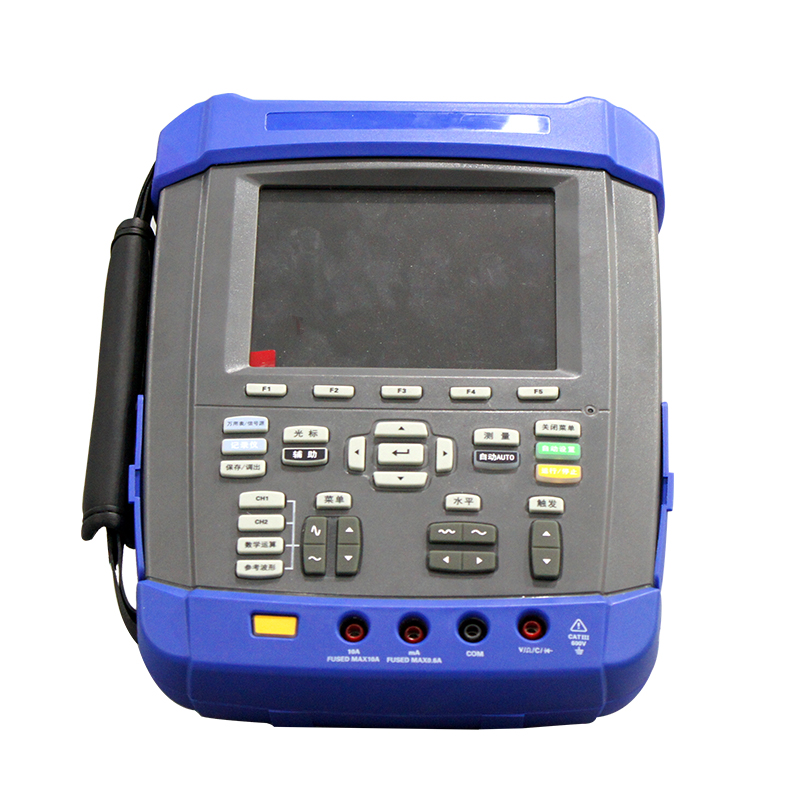
HZ-9003C Multifunctional Partial Discharge Tester

 中文
中文
 English

 +86-312-6775656
 +86 13731210226
 sales03@bdhuazheng.com
