10KV high-voltage lines are widely distributed, have long overhead lines, and operate in the open air. They are often affected by the surrounding environment and natural changes. Failures often occur during operation, affecting normal power supply and bringing certain harm to people's production and life.
Failure cause analysis:
1. The influence of tree barriers. In rural areas, it is common for lines to run parallel to or cross trees. Trees are blown down and fall on the line, branches are broken and fall on the line, branches swing and sweep the line, and artificial felling of trees causes the tree to fall on the line, causing line failure and causing serious harm.
2. The influence of wind. If the wind force is too strong and exceeds the mechanical strength of the tower, it will tilt or damage the tower, and cause the wires to vibrate, jump and hit the wires, causing overcurrent or rapid breakage.
3. The impact of lightning. When a line is struck by lightning, the insulator will flashover or breakdown.
4. The influence of ice and snow. In winter, when there is severe ice coating on the wires, the wires will be broken or disconnected. When the ice coating falls off, it will cause wire jumping or flashover accidents.
5. The influence of rain. Drizzle will cause flashover, discharge, and even damage to dirty insulators. Heavy downpours will cause the river water to surge to the point of flash floods, causing accidents such as pole overturning and wire breakage.
6. The influence of temperature changes. When the air temperature changes, the wire tension also changes. In the hot summer, due to the expansion of wires, the sag becomes larger, which may cause discharge accidents at cross-spans or short-circuit accidents in stranded wires. In winter, due to the shrinkage of the wires, the stress increases, which may cause wire breakage.
Failure prevention and maintenance
Make regular inspections. Comprehensively understand the operating status of each component of the line and the situation along the line. Rural lines should be inspected at least once a quarter, and generally once a month. According to the environment around the line, equipment status and seasonal changes, the number of inspections should be increased appropriately.
(1) Inspection along the line. During the inspection, obstacles such as mounds of soil and grass piles and branches that may damage conductors should be eliminated in the protection area, and ongoing engineering conditions and various abnormal phenomena along the line should be checked.
(2) Inspection and inspection of pole towers. Whether its components are skewed, whether the foundation has collapsed or been washed away by rain, whether the steel bars of the cement pole are exposed, whether there are cracks in the pole body, and whether the surrounding soil is sinking or protruding.
(3) Inspection of wires. Whether there are broken strands, damage, flashover burn marks, and whether the three-phase conductor sag is balanced. Whether the distance between wires and ground, crossing facilities and other objects meets the regulations, whether the wires are seriously corroded, whether the wire clamps are corroded, etc.
(4) Inspection of insulators and porcelain bottles. Check whether it is dirty, whether there are cracks in the porcelain parts or missing cotter pins, spring pins, etc.
(5) Inspection of lightning protection and grounding devices. Whether the lightning protection equipment is complete, whether the lightning arrester operates, and whether the grounding down conductor is intact.
(6) Line inspection. Check whether there is corrosion, slackness or broken strands, whether the force is uniform, and whether the pull rod and lower handle are corroded or damaged.
Night patrol. Check the connections of wires and insulator defects for discharge and local ignition. This should be done on a moonless night with heavy load.
Special inspection. In severe weather conditions, such as ice and snow, swollen rivers and mountains, thawing, fires, etc., all or part of the overhead lines will be inspected. In this case, the inspection time is not determined.
To ensure the safe, reliable and economical operation of lines, full consideration should be given during design and installation. Inspections, inspections, operation and maintenance are also important. Regularly conduct testing and maintenance of electrical equipment, carefully conduct equipment inspections and defect management, understand the operating status of equipment, and ensure the safe operation of the power grid.
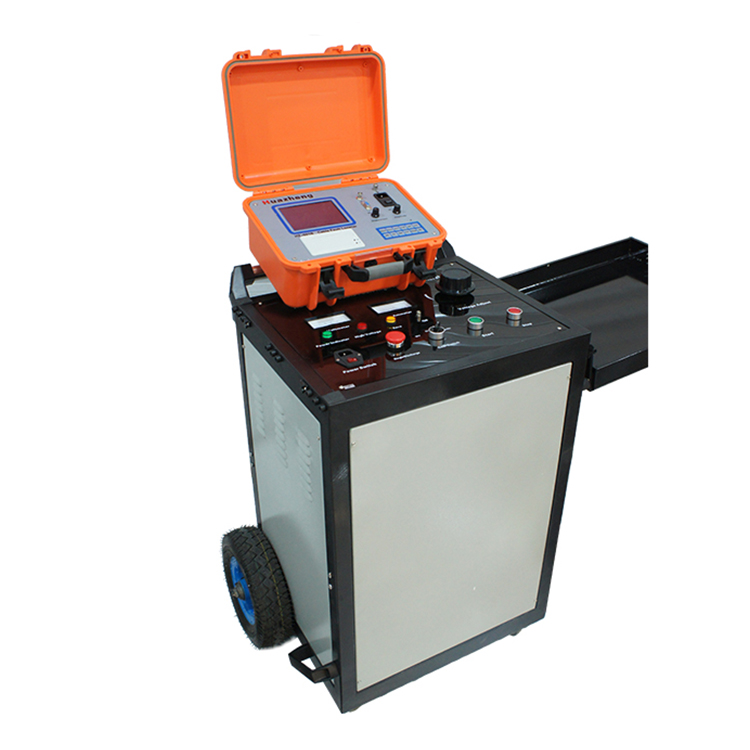
HZ-501B Cable Fault Location System

 中文
中文
 English
 +86-312-6775656
 +86 13731210226
 sales03@bdhuazheng.com
