1. PLC manufacturers
To determine the PLC manufacturer, you should mainly consider the requirements of equipment users, the designer's familiarity and design habits with PLCs from different manufacturers, the consistency of supporting products, and technical services. Considering the reliability of PLC itself, in principle, as long as it is a product of a large foreign company, there should be no problem of poor reliability. Generally speaking, for the occasion of controlling independent equipment or a relatively simple control system, it is relatively cost-effective to use Japanese PLC products. For distributed control systems and remote I/O systems with large-scale systems requiring high network communication functions and openness, PLCs produced in Europe and the United States have more advantages in network communication functions. In addition, for some special industries (such as: metallurgy, tobacco, etc.), mature and reliable PLC systems with operational performance in related industries should be selected.
2. Input and output (I/o) points
The number of input/output points of PLC is one of the basic parameters of PLC. The determination of the number of I/O points should be based on the sum of all I/O points needed to control the device. In general, PLC I/O points should have an appropriate margin. Usually, according to the statistical input and output points, after adding 10% to 20% of the expandable margin, it is used as the estimated data of input and output points. When actually ordering, it is necessary to adjust the number of input and output points according to the product characteristics of the manufacturer's PLC.
3. Storage capacity
The memory capacity is the size of the hardware storage unit that can be provided by the programmable controller itself, and the program capacity is the size of the storage unit used by user application items in the memory, so the program capacity is smaller than the memory capacity. In the design stage, since the user application program has not been compiled, the program capacity of the WeChat public account PLC engineer can get information, increase knowledge and improve skills is unknown in the design stage, and it needs to be known after program debugging. In order to have a certain estimate of the program capacity when designing and selecting, the estimation of the memory capacity is usually used instead. There is no fixed formula for estimating the memory capacity of PLC memory. Many literatures have given different formulas, which are generally based on 10 to 15 times the number of digital I/O points, plus 100 times the number of analog I/O points. This number is the total number of words in the memory (16 bits is a word), and then consider the margin according to 25% of this number.
4. Control function
The selection includes the selection of characteristics such as arithmetic function, control function, communication function, programming function, diagnosis function and processing speed.
1. Operation function
The operation functions of simple PLC include logical operation, timing and counting functions; the operation functions of ordinary PLC also include operation functions such as data shifting and comparison; more complex operation functions include algebraic operation, data transmission, etc.; there are also analog quantities in large PLCs. PID calculation and other advanced calculation functions. With the emergence of open systems, all PLCs have communication functions at present. Some products have communication functions with lower computers, some products have communication functions with peer computers or upper computers, and some products also have data communication functions with factories or enterprise networks. function. When designing and selecting models, we should proceed from the requirements of practical applications and choose the required computing functions reasonably. In most applications, only logic operations and timing and counting functions are required, and some applications require data transmission and comparison. When used for analog detection and control, algebraic operations, numerical conversion, and PID operations are used. Other operations such as decoding and encoding are required to display data.
2. Control function
Control functions include PID control calculation, feedforward compensation control calculation, ratio control calculation, etc., which should be determined according to control requirements. PLC is mainly used for sequential logic control. Therefore, single-loop or multi-loop controllers are often used in most occasions to solve the control of analog quantities, and sometimes special intelligent input and output are also used. PLC engineers can use information to improve knowledge and skills. The unit completes the required control functions, improves the processing speed of the PLC and saves the memory capacity. For example, PID control unit, high-speed counter, analog unit with speed compensation, ASC code conversion unit, etc. are used.
3. Communication function
Large and medium-sized PLC systems should support a variety of field buses and standard communication protocols (such as TCP/IP), and should be able to connect with the factory management network (TCP/IP) when necessary. The communication protocol shall conform to the ISO/IEEE communication standard and shall be an open communication network.
The communication interfaces of the PLC system should include serial and parallel communication interfaces (RS2232C/422A/423/485), RIO communication ports, industrial Ethernet, common dcs interfaces, etc.; large and medium-sized PLC communication buses (including interface equipment and cables) should be considered Redundant configuration, the communication bus should comply with international standards, and the communication distance should meet the actual requirements of the device. In the communication network of the PLC system, the upper-level network communication rate should be greater than 1Mbps, and the communication load should not be greater than 60%. The main forms of the communication network of the PLC system are as follows:
1) The PC is the master station, and multiple PLCs of the same model are slave stations, forming a simple PLC network;
2) One PLC is the master station, and other PLCs of the same model are slave stations, forming a master-slave PLC network;
3) The PLC network is connected to a large DCS as a DCS subnet through a specific network interface;
4) Dedicated PLC network (dedicated PLC communication network of each manufacturer).
In order to reduce CPU communication tasks, PLC should choose communication processors with different communication functions (such as point-to-point, field bus, and industrial Ethernet) according to the actual needs of network composition.
4. Programming function
Off-line programming mode: PLC and programmer share one CPU. When the programmer is in programming mode, the CPU only provides services for the programmer and does not control the field devices. After the programming is completed, the programmer switches to the running mode, and the CPU controls the field devices without programming. Off-line programming can reduce system cost, but it is inconvenient to use and debug.
On-line programming mode: CPU and programmer have their own CPUs, the host CPU is responsible for on-site control, and exchanges data with the programmer in one scan cycle, the programmer sends the online program or data to the host, and the next scan cycle, The host computer runs according to the newly received program. This method is expensive, but the system debugging and operation are convenient, and it is often used in large and medium-sized PLCs.
Five standardized programming languages: Sequential Function Chart (SFC), Ladder Diagram (LD), Function Block Diagram (FBD) three graphical languages and two text languages Statement List (IL) and Structured Text (ST). The selected programming language should comply with its standard (IEC6113123), and should also support multi-language programming forms, such as C, Basic, Pascal, etc., to meet the control requirements of special control occasions.
Precautions for PLC selection (you are also an expert after reading it)
5. Diagnostic function
The diagnosis function of PLC includes the diagnosis of hardware and software. Hardware diagnosis determines the hardware fault location through hardware logic judgment, and software diagnosis is divided into internal diagnosis and external diagnosis. Diagnosing the internal performance and functions of the PLC through software is an internal diagnosis, and using software to diagnose the information exchange functions of the PLC's CPU and external input and output components is an external diagnosis.
The strength of the PLC's diagnostic function directly affects the requirements for the technical ability of the operation and maintenance personnel, and affects the average maintenance time.
6. Processing speed
PLC works in scanning mode. From the perspective of real-time requirements, the faster the processing speed, the better. If the signal duration is shorter than the scan time, the PLC will not be able to scan the signal, resulting in loss of signal data.
The processing speed is related to the length of the user program, CPU processing speed, software quality, etc. At present, the response and speed of PLC contacts are fast, and the execution time of each binary instruction is about 0.2-0.4 μs, so it can meet the application needs of high control requirements and fast corresponding requirements. The scan cycle (processor scan cycle) should meet: the scan time of small PLC is not more than 0.5ms/K; the scan time of large and medium PLC is not more than 0.2ms/K.
5. PLC model
Types of PLC: According to the structure, PLC is divided into two types: integral type and modular type.
Integral PLC has fewer I/O points and is relatively fixed, so users have less room for choice, and are usually used in small control systems. Representatives of this type of PLC include: Siemens' S7-200 series, Mitsubishi's FX series, Omron's CPM1A series, etc.
Modular PLC provides a variety of I/O modules that can be plugged on the PLC substrate, which is convenient for users to reasonably select and configure the I/O points of the control system according to their needs. Therefore, the configuration of modular PLC is relatively flexible, and it is generally used in large and medium-sized control systems. For example, Siemens' S7-300 series and S7-400 series, Mitsubishi's Q series, Omron's CVM1 series, etc.
6. Various module options
1. Digital I/O module
The choice of digital input and output modules should consider the application requirements. For example, for input modules, application requirements such as input signal level and transmission distance should be considered. There are also many types of output modules, such as relay contact output type, AC120V/23V bidirectional thyristor output type, DC24V transistor drive type, DC48V transistor drive type, etc.
Generally, the relay output output module has the advantages of low price and wide voltage range, but the service life is short, the response time is long, and a surge absorption circuit needs to be added when used for inductive loads; the bidirectional thyristor output module has a faster response time It is suitable for frequent switching and inductive low power factor load occasions, but it is more expensive and has poor overload capacity.
In addition, according to the number of input and output points, the input and output modules can be divided into: 8 points, 16 points, 32 points and other specifications, and the selection should be reasonably equipped according to actual needs.
2. Analog I/O module
Analog input modules can be divided into: current input type, voltage input type, thermocouple input type, etc. according to the type of analog input signal. Current input type usually has a signal level of 4~20mA or 0~20mA; voltage type input module usually has a signal level of 0~10V, -5V~+5V, etc. Some analog input modules are compatible with voltage or current input signals.
The analog quantity output module is also divided into voltage type output module and current type output module, the current output signal usually has 0~20mA, 4~20mA. Voltage output signals usually include 0~0V, -10V~+10V, etc.
Analog input and output modules can be divided into 2-channel, 4-channel, 8-channel and other specifications according to the number of input and output channels.
3. Functional modules
Functional modules include communication module, positioning module, pulse output module, high-speed counting module, PID control module, temperature control module, etc. When selecting a PLC, the possibility of matching functional modules should be considered. The selection of functional modules involves two aspects of hardware and software.
Seven, redundant function
1. Control unit redundancy
a. Important process units: CPU (including memory) and power supply should be 1B1 redundant.
b. When necessary, the hot standby redundant system composed of PLC hardware and hot standby software, 2-fold or 3-fold redundant fault-tolerant system, etc. can also be selected.
2. I/O interface unit redundancy
a. The multi-point I/O card of the control loop should be redundantly configured.
b. The multi-point I/O cards of important detection points can be configured redundantly. 3) For important I/O signals as required, double or triple I/O interface units can be selected.
8. General rules
After the PLC model and specifications are generally determined, the basic specifications and parameters of each component of the PLC can be determined one by one according to the control requirements, and the model of each component module can be selected. When selecting a module model, the following principles should be followed.
1. Economy
When choosing a PLC, the performance-price ratio should be considered. When considering the economy, factors such as the scalability, operability, and input-output ratio of the application should be considered at the same time, and comparisons and considerations should be made to finally select a more satisfactory product.
The number of input and output points has a direct impact on the price. Each additional input and output card requires an additional fee. When the number of points increases to a certain value, the corresponding memory capacity, rack, motherboard, etc. will also increase accordingly. Therefore, the increase in the number of points will have an impact on the selection of CPU, memory capacity, and control function range. It should be fully considered when estimating and selecting, so that the entire control system has a more reasonable performance-price ratio.
2. Convenience
Generally speaking, as a PLC, there are often many kinds of modules that can meet the control requirements. The selection should be based on the principle of simplifying the circuit design, facilitating use, and reducing external control devices as much as possible. Wechat public account PLC engineers can use information to improve knowledge and skills. For example: for input modules, the input form that can be directly connected to external detection components should be selected first, and the use of interface circuits should be avoided. For the output module, the output module that can directly drive the load should be selected first, and the intermediate relay and other components should be reduced as much as possible.
3. Versatility
When selecting a model, it is necessary to consider the unity and commonality of each component module of the PLC to avoid too many types of modules. This is not only conducive to procurement and reduces spare parts, but also increases the interchangeability of the components of the system, providing convenience for design, commissioning and maintenance.
4. Compatibility
Compatibility should be fully considered when selecting the components of the PLC system. In order to avoid the problem of poor compatibility, there should not be too many manufacturers of the main components that make up the PLC system. If possible, try to choose products from the same manufacturer.
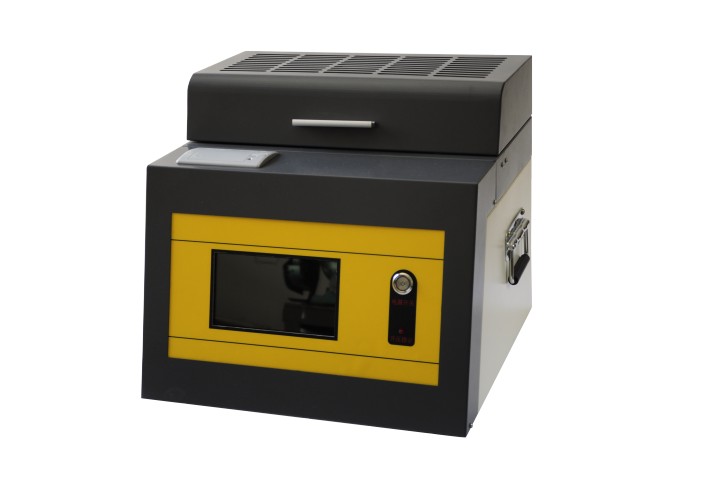
HZJQ-W1 Insulating Oil Dielectric Strength Tester

 中文
中文
 English

 +86-312-6775656
 +86 13731210226
 sales03@bdhuazheng.com
